
Why Centrifuge Choice Matters for Cell Separation
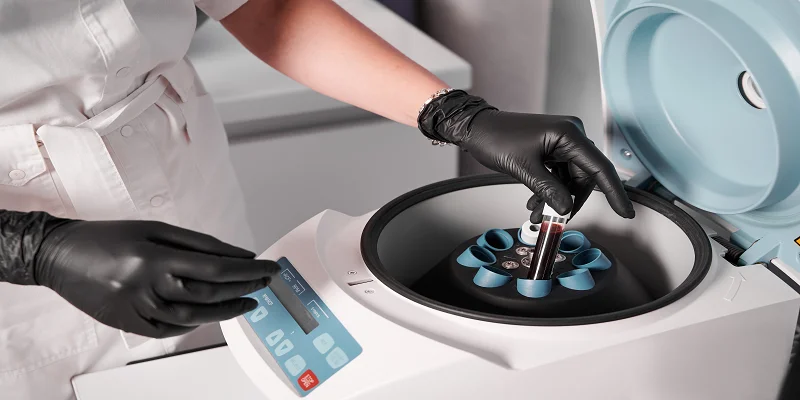
Equipment choice in cell separation work dictates viability and yield outcomes. The specifications of a cell separation centrifuge control both the gravitational forces and thermal conditions that biological samples experience during processing. When temperature management falls short or rotational speeds climb too high, researchers risk membrane damage and oxidative stress that compromise sample integrity.
The Impact of Force on Cell Viability and Yield
Relative centrifugal force (RCF) settings determine how quickly cells settle and whether they survive the separation process. Different cell types respond to gravitational stress in distinct ways. Protocol developers must balance the need for efficient separation against the mechanical forces that can rupture delicate cellular structures.
Research demonstrates that extreme centrifugation parameters carry significant risks. Subjecting samples to an RCF of 10,000 x g for 30 minutes followed by intense resuspension can lead to increased loss of cell membrane integrity. The damage becomes measurable using assays that detect changes in membrane permeability and cellular leakage.
Lower force settings often produce better outcomes for sensitive cell populations. When working with osteoprogenitor cells, researchers found that using a centrifugation force of 400 x g with a 1:1 dilution proved superior to 1,000 x g protocols for recovering a higher total number of osteoprogenitor cells. The gentler approach preserved cell function while maintaining acceptable processing times.
These findings highlight why equipment must offer precise RCF control across a wide range. Laboratories handling multiple cell types need instruments that can reliably deliver both the gentle forces required for fragile primary cells and the higher speeds necessary for more robust cell lines.
Critical Capabilities in a Lab Centrifuge for Cells
Researchers evaluating a lab centrifuge must assess several performance parameters before making a purchase decision. Speed range and maximum RCF are good starting points. Capacity considerations include rotor volume and the number of samples processed per run. Temperature control systems separate basic models from units designed for sensitive biological work. Long-term reliability affects both experimental consistency and the total cost of ownership over the instrument's service life.
Temperature Management and Refrigeration
Thermal control during centrifugation protects samples from heat-generated damage that accumulates as rotors spin at high speeds. Temperature variations can alter cellular metabolism and trigger stress responses that skew experimental results. Different cell types show distinct thermal sensitivities that inform protocol design.
Research on temperature-dependent effects reveals that cooling to 4° Celsius during centrifugation helps reduce ROS production and DNA fragmentation in certain cell populations. The lower temperature slows metabolic processes that would otherwise generate reactive oxygen species. Some cell types maintain better membrane integrity and motility at 37° Celsius, making temperature optimization a protocol-specific consideration rather than a universal rule.
Refrigerated centrifuge systems actively extract heat from the chamber during operation using compressor-driven cooling mechanisms. These systems circulate refrigerant through coils that absorb thermal energy generated by friction and motor operation. The active cooling approach maintains stable chamber temperatures even during extended high-speed runs that would cause significant heat buildup in nonrefrigerated units.
Equipment Age and System Reliability
Hardware longevity and parts availability influence whether used instruments can deliver consistent performance over time. A device's age sometimes dictates its ability to perform effectively when the original manufacturer no longer supports that model with replacement components. Purchasing an instrument orphaned by its maker creates maintenance challenges that can sideline equipment at inopportune moments.
Used analytical equipment typically has a remaining service life of five to 10 years when sourced from reputable dealers. This projection assumes a proper maintenance history and realistic assessment of wear on motor assemblies, bearing systems and control electronics. New Life Scientific (NLS), a used laboratory equipment dealer, quality-assures instruments through technician testing before sale to verify that operational parameters match manufacturer specifications.
Where Can Biotech Professionals Find a Centrifuge for Cell Separation?
Laboratories can reference detailed resources on equipment evaluation when considering models like New Life Scientific’s Beckman Coulter Avanti J-15R refrigerated benchtop centrifuge for cell separation. Understanding the implications of equipment age, service life expectations and refrigeration system requirements helps researchers make informed procurement decisions.
New Life Scientific offers warranted used instruments that undergo quality assurance by its technicians before reaching customers. Each benchtop centrifuge for cell separation ships with documentation of the testing procedures performed to verify performance parameters.
The combination of prompt customer service, rigorous and warranty protection addresses primary concerns when purchasing used laboratory equipment. Researchers can consult New Life Scientific’s team for guidance on selecting instruments that match specific protocol requirements and workflow constraints.
Frequently Asked Questions on Choosing Centrifuges for Cell Separation
Equipment selection generates common questions about specifications, maintenance and performance verification. The following addresses key considerations for labs establishing or upgrading centrifugation capabilities.
Why does centrifuge force matter for cell separation?
Different RCF settings produce different outcomes in cell viability and recovery. Research shows that extreme forces like 10,000 x g combined with aggressive resuspension can damage cell membranes, while gentler protocols around 400 x g preserve fragile cell populations better than higher speeds. The right force setting depends on the specific cell type and protocol requirements.
Should refrigeration be prioritized in a lab centrifuge for cells?
Temperature control is essential to protect samples from heat-related damage during processing. Cooling to 4° Celsius reduces reactive oxygen species production and DNA fragmentation in temperature-sensitive cells. Refrigerated systems use compressor-driven cooling to actively extract thermal energy that builds up during high-speed operation.
What's the realistic remaining service life of used centrifuges?
Used analytical equipment typically offers five to 10 years of remaining operational life when properly maintained. The key consideration is whether the original manufacturer still supports that model with replacement components. Equipment orphaned by the discontinuation of parts creates maintenance challenges that can interrupt laboratory workflows.
How can professionals verify that used equipment will perform reliably?
Reputable dealers quality-assure instruments through technician testing before sale. Documentation should include performance data showing the unit operates within manufacturer specifications. Testing certificates allow researchers to compare actual measured parameters across different instruments and verify speed accuracy and temperature control.
What capabilities matter most when selecting equipment?
Researchers need instruments that offer precise force control within appropriate ranges for their cell types. Temperature management systems separate basic units from those designed for sensitive biological work. Capacity considerations include rotor volume and the number of samples per run. Long-term reliability affects both experimental consistency and total ownership costs.
Equipment Priorities for Optimal Biological Research
The centrifuge that a laboratory chooses establishes the foundation for reproducible cell separation outcomes. Equipment that lacks adequate temperature control or precise force calibration introduces variables that may compromise data quality across years of experiments. Careful evaluation of instrument specifications, vendor support systems and documented testing procedures protects research integrity from the mechanical limitations that undermine otherwise sound protocols.
Author Bio:

Megan Vitanza
Marketing strategist
Megan Vitanza is a marketing strategist, loving mother, wife, bookworm and gamer. As Senior Digital Media Consultant at WebFX, she spends her days researching and producing content for her manufacturing clients. In her off hours she enjoys baby snuggles and cozying up with a good book.
 Media Pack Download
 Newsletters
 Industrial Events